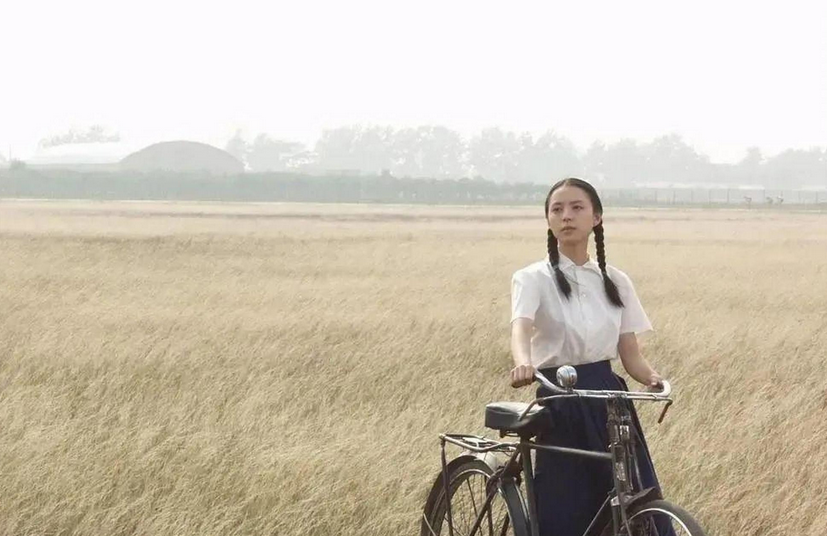
Peacock (film)
Introduction
Peacock is a 2005 film directed by Gu Changwei, marking his directorial debut after a distinguished career as a cinematographer collaborating with some of China's renowned directors. Written by Li Qiang, the film tells an evocative story set against the backdrop of a small town in China during the late 1970s and early 1980s. The film premiered at the 2005 Berlin International Film Festival, where it competed and received critical acclaim, winning the Jury Grand Prix Silver Bear. Peacock was released in three different versions: a 136-minute cut for China, a 141-minute version for Japan, and a 144-minute edition for Germany.
The narrative of Peacock intricately unfolds through a tripartite structure, each segment focusing on the lives of the three siblings in the Gao family. This structure allows the film to explore the complex social dynamics and individual aspirations within the family, set against the historical and cultural transitions of the era. The film's poignant storytelling and rich character development have contributed to its recognition in international cinema, showcasing Gu Changwei's adeptness in his transition from cinematography to directing.
Plot
The plot of Peacock centers around the Gao family, consisting of a middle-aged couple and their three children, each with unique personalities and challenges. The eldest son, Gao Weiguo, is obese and mentally challenged, often facing ridicule and bullying from peers. The middle child, daughter Gao Weihong, is a spirited and independent young woman with dreams of joining the People's Liberation Army's paratrooper unit. The youngest son, Gao Weiqiang, is an introverted boy who feels burdened by his family's struggles and yearns for a different life.
The film is structured into three distinct sections, each focusing on one sibling. It begins with Weihong, whose lively spirit leads her to a series of adventures and misadventures, including an infatuation with a paratrooper and a whimsical attempt to parachute using a makeshift contraption. Her story is marked by her resilience and determination to forge her path despite societal and familial constraints.
The narrative then shifts to Weiguo, whose life is marked by challenges due to his disability. Despite the care and protection offered by his parents, Weiguo's experiences highlight the societal prejudice and struggles faced by individuals with disabilities. His relationship with his younger brother Weiqiang is strained, culminating in a dramatic confrontation that underscores the family's complexities.
Finally, the story focuses on Weiqiang, who grapples with his sense of identity and belonging. His journey reflects his quest for independence and self-discovery, leading him away from his family's influence and into a world of uncertainties. The film concludes by showing the siblings' lives years later, providing a reflective closure to their individual stories.
Cast
The film features a talented ensemble cast, bringing life and authenticity to the characters of the Gao family. Zhang Jingchu stars as Gao Weihong, the determined and dynamic sister whose aspirations drive much of the film's narrative. Feng Li portrays Gao Weiguo, the elder brother whose character embodies the challenges faced by individuals with disabilities. Lu Yulai plays Gao Weiqiang, the introspective younger brother whose journey of self-discovery forms a crucial part of the storyline.
The supporting cast includes Huang Meiying and Zhao Yiwei as the parents of the Gao family, whose roles add depth to the familial dynamics. Liu Lei appears as Guo Zi, a factory worker who becomes involved with Weihong, while Wang Lan plays Jin Zhi, Weiguo's wife in an arranged marriage. Yu Xiaowei is featured as the Paratrooper, a character central to Weihong's dreams.
Other notable cast members include Shi Junhui as Xiaowang, the driver who marries Weihong, and An Jing as Zhang Lina, Weiqiang's singer wife. The film also includes performances by Liu Guonan, Wang Yingjie, Zong Ping, Yang Meng, and Gu Changwei himself, who makes a cameo as a blind man.
Production
Peacock marks a significant milestone in Gu Changwei's career as his first directorial venture. Having established himself as a prominent cinematographer, Gu's transition to directing brought a unique visual and narrative style to the film. The production captures the essence of the late 1970s and early 1980s in China, with meticulous attention to detail in setting, costumes, and cultural references.
The film's screenplay, penned by Li Qiang, weaves a rich tapestry of personal and social themes, drawing from the socio-political context of the era. The production team's efforts in recreating the period setting contribute to the film's authenticity and immersive storytelling.
The cinematography of Peacock reflects Gu Changwei's expertise in visual storytelling, with the use of natural lighting and evocative imagery enhancing the film's emotional depth. The production design complements the narrative, capturing the nuances of the characters' lives and the environment they inhabit.
Reception
Upon its release, Peacock received widespread acclaim for its storytelling, direction, and performances. Critics praised Gu Changwei's ability to transition seamlessly from cinematography to directing, highlighting the film's visual style and narrative structure. The film was particularly noted for its exploration of family dynamics, individual aspirations, and societal challenges, resonating with audiences both in China and internationally.
The film's premiere at the 2005 Berlin International Film Festival marked its entry into the global cinematic landscape, earning the Jury Grand Prix Silver Bear. This recognition established Peacock as a significant work in contemporary Chinese cinema, showcasing the potential of its director and cast.
Awards and Nominations
Peacock achieved considerable success on the festival circuit, garnering awards and nominations that underscored its impact and artistic merit. The most notable accolade came from the Berlin International Film Festival, where it was awarded the Jury Grand Prix Silver Bear. This prestigious award highlighted the film's distinctive approach to storytelling and its contribution to the cinematic arts.
The film's success at Berlin opened doors to further recognition, with nominations and awards at other international festivals and events. These accolades affirmed Peacock's status as a critically acclaimed film and solidified its place in the canon of influential Chinese cinema. Photo Gallery(1 picture)CategoriesArtsTagFilm and TVCatalogue1. Introduction2. Plot3. Cast4. Production5. Reception6. Awards and Nominations- - - []








